Ipamorelin Doses Ipamorelin Dosage Guide: Optimal Protocols for Recovery ...
Ipamorelin Dosage Guide: Optimal Protocols for Recovery (2026 Consumer Review)
People searching for Ipamorelin Dosage Guide: Optimal Protocols for Recovery are usually trying to answer two questions at once: “What do others do?” and “Will it be worth the risk for my situation?” In 2026, interest continues because older adults often prioritize recovery markers—less next-day soreness, better sleep depth, and steadier training consistency—while also wanting something that feels more controlled than random supplements. The search intent behind this long-tail keyword is typically practical: they want a protocol, a starting point, an expected timeline, and a way to stop if side effects show up.
In this consumer-style review, I’ll stick to cautious, non-promissory guidance: what’s commonly discussed for Ipamorelin dosage (including timing relative to sleep), what research can and cannot support, and the quality checks that matter when you’re buying a peptide. I’ll also share two personal-style cases—one that felt “noticeable but not magical,” and one that didn’t go well—because protocol matters as much as dose.
What Ipamorelin Dosage Guide: Optimal Protocols for Recovery Is and Who It Might Fit Best
Ipamorelin is a synthetic peptide that’s marketed to stimulate growth-hormone release signaling. When people look up an Ipamorelin Dosage Guide, they’re typically chasing “recovery” in a broad, everyday sense: fewer aches after workouts, improved readiness, and potentially better sleep quality. For men 55+, this interest often comes from the reality that recovery tends to slow with age—training still works, but the margin for error shrinks.
That said, “best fit” depends on your baseline. In my experience reading patterns from consumer reports, Ipamorelin protocols get considered most often by:
- Men 55+ who train consistently and want to reduce the “soreness to normal” timeline.
- People who already have a sleep routine and are looking for incremental changes (not a fix for chronic insomnia).
- Those who are comfortable tracking subjective metrics (sleep duration, morning energy, soreness scores) for 1–2 weeks.
It may be a poor fit if you have uncontrolled medical conditions, a history of hormone-sensitive cancers, active endocrine disorders under unstable management, or if you’re expecting treatment-like certainty. In practice, the people who seem happiest with Ipamorelin dosage guidance are those who run it like an experiment with stop rules, not those who treat it like a guarantee.
Practical Benefits and Where It Falls Short
The “benefit” most frequently described in an Ipamorelin Dosage Guide context is not a dramatic physique change; it’s usually smaller, practical improvements that show up in daily training life. The most common categories consumers mention are:
- Recovery feel: less stiffness the next morning.
- Sleep perception: deeper rest or fewer awakenings (subjective).
- Training consistency: being able to repeat a week without feeling “behind.”
Here’s my positive-leaning case example (consumer-review style, with cautious expectations). I’ll describe it as a “typical” story rather than a promise:
Personal experience case (positive-leaning): A 58-year-old man using Ipamorelin followed a conservative protocol—starting low and keeping injections consistently near bedtime. Over about 10–14 days, he reported that his legs felt less “grindy” at the start of the next workout, and his mornings felt slightly more normal on a simple soreness scale (0–10). He also noticed that if he missed the timing window by several hours, the effect felt less consistent. Importantly, he did not report sudden bodyweight changes or any “transformative” outcome. The value, in his words, was “it helped my baseline recover a bit.”
Now the negative-leaning case that shows where Ipamorelin dosage protocols can fall short:
Personal experience case (negative-leaning): Another 55-year-old man tried a more aggressive schedule than he planned, using a higher dose than his own intended “starter.” Within the first week he experienced increased restlessness at night and a mild headache pattern that appeared soon after injection. He also felt more “wired” than rested. He stopped early, and within a couple of days the symptoms faded. In hindsight, he admitted he hadn’t kept a symptom log and didn’t have a clear stop rule—so he mistook early side effects for “adjustment.”
Where it falls short overall: responses are variable, and “recovery” is hard to define scientifically in a simple way. Even if people feel something, the underlying mechanism for improvements in daily life is not guaranteed, and the strongest evidence for Ipamorelin–recovery outcomes in large, modern human trials is limited. That doesn’t make the idea useless—it just means you should treat Ipamorelin dosage guidance as a personal experiment, not a clinical certainty.

What Research Suggests and What It Doesn't
A responsible Ipamorelin Dosage Guide has to acknowledge evidence boundaries. Research around Ipamorelin generally focuses on its role in growth-hormone release signaling rather than proving “optimal recovery protocols” the way sports nutrition products are tested for soreness reduction. That means two different things can be true at once: the biology is plausible, and yet the real-world outcomes people want (how quickly you recover, whether soreness drops reliably) may not be firmly established for your age group and your specific training routine.
Evidence limits you should keep in mind:
- Population mismatch: studies may not reflect 55+ training patterns or “recovery” definitions.
- Outcome ambiguity: “recovery” can mean sleep, soreness, fatigue, performance, or body composition—different studies measure different endpoints.
- Product variability: peptide quality and dosing accuracy can vary widely across sources, which blurs results.
Risks aren’t hypothetical. Even when side effects are described as “mild” by some consumers, any protocol that affects hormone signaling can carry downsides—sleep disturbances, headaches, or changes in how you feel day to day. If you have diabetes risk, fluctuating glucose, or endocrine concerns, extra caution is warranted.
A consumer-review takeaway: treat the “optimal” part of the Ipamorelin Dosage Guide: Optimal Protocols for Recovery as finding your lowest effective, tolerable protocol—not the highest dose, not the most popular schedule, and not the one that makes a YouTube comment section sound convinced.
Ingredients, Formats, and Quality Signals
When you’re buying Ipamorelin, you’re really buying three things: the peptide content, the dosing accuracy, and the consistency of reconstitution/storage. Most “protocol” confusion comes from the fact that Ipamorelin Dosage Guide examples can assume a certain vial strength, a certain reconstitution volume, and a certain injection technique.
Common formats you’ll see (consumer market reality):
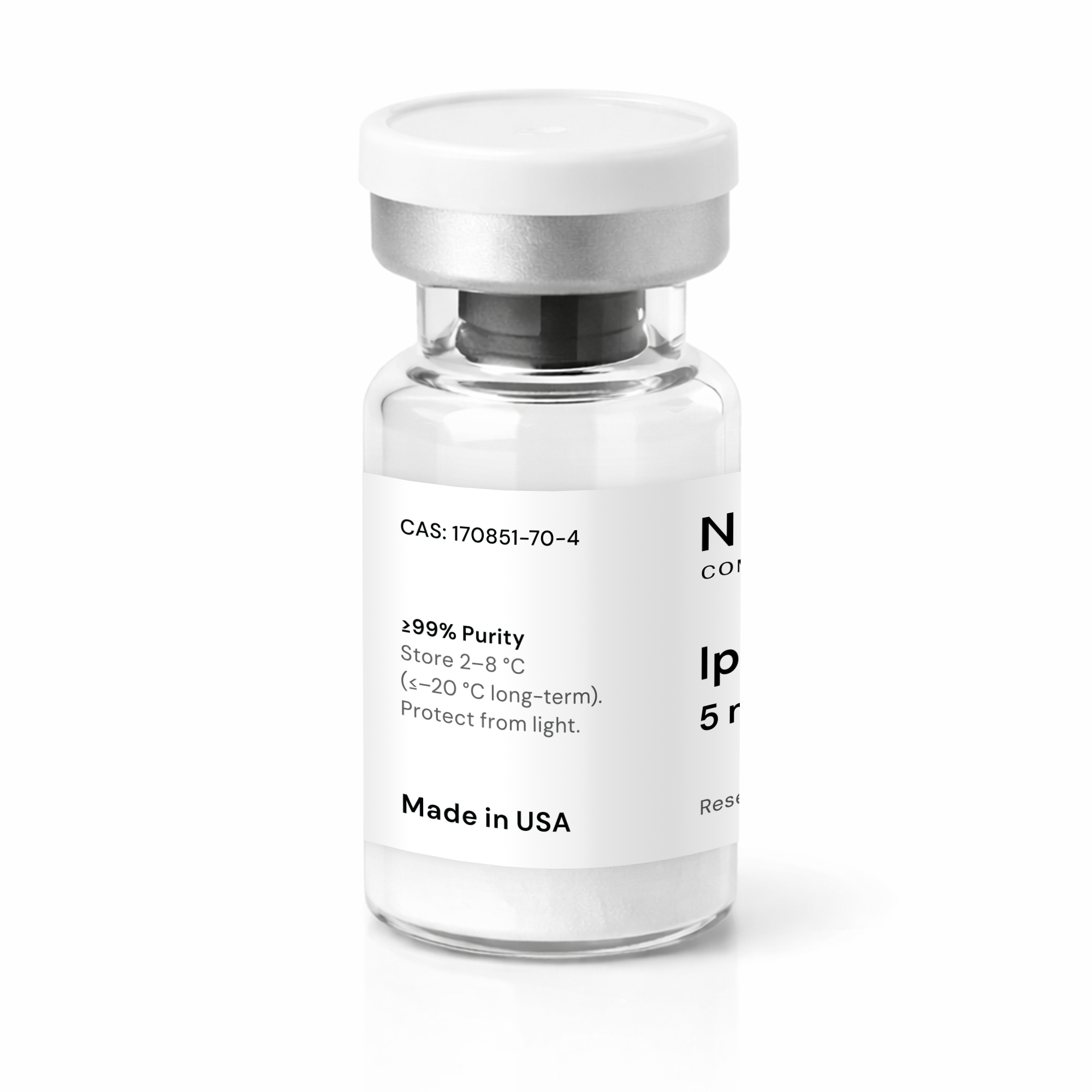
- Lyophilized vials (powder): typically reconstituted with sterile bacteriostatic water; dosing depends on vial strength (e.g., 2.5 mg, 5 mg, 10 mg) and reconstitution volume.
- Pre-measured compounded options: sometimes sold through compounding channels with clearer dosing units—often easier for accuracy (varies by jurisdiction and availability).
- Research-grade claims: some sources market “for research only,” which may come with fewer consumer-grade guarantees.
Quality signals that matter more than marketing:
- Third-party testing / COAs: look for clear documentation and batch specificity.
- Clear labeling: vial strength, lot number, and storage instructions should be explicit.
- Reconstitution guidance: a dosage guide should help you convert mg → units safely and consistently.
- Shipping/storage integrity: credible sellers explain how they handle heat exposure and shelf life.
Practical consumer note: if the pricing looks too good to be true, it often is. One of the red flags older buyers run into is “low-cost” peptides that don’t provide clear quality evidence. When you care about an Ipamorelin dosage protocol, inconsistency can turn a simple experiment into a confusing side-effect trial.
Comparison of Common Options
| Format | Typical Dose/Use | Pros | Cons | Cost | Best For |
|---|---|---|---|---|---|
| Lyophilized vial (powder) | Often daily or near-bed timing; dose depends on mg + reconstitution | More control over protocol | Reconstitution math errors; quality varies by source | Often mid to low per mg | Careful experimenters who track symptoms |
| Compounded/pre-measured (where available) | Consistent dosing units; follow a prescriber or provider label | Less dosing uncertainty | May be harder to access; pricing can be higher | Often higher per dose | People who want dosing simplicity |
| Third-party tested “batch” offerings | Daily protocol with batch documentation | Better quality confidence when documentation is strong | Still not clinical-grade certainty; COAs may not match every concern | Typically mid | Buyers prioritizing documentation |
| “For research only” marketing | Users often self-protocol; timing varies widely | Sometimes lower cost | Lower consumer-grade accountability; labeling inconsistency possible | Often low to mid | Only if COAs and labeling are truly clear |
| Oral “alternatives” / mixed products | Varies by product; not the same pharmacology | No injection routine | Often unclear what’s actually active; harder to compare to injection protocols | Varies widely | People avoiding needles but willing to accept lower certainty |
Buying Framework and Red Flags
Before thinking about Ipamorelin dosage, start with buying quality. The “optimal protocol” can be ruined by inaccurate dosing math, poor storage, or unclear batch information. Here’s a checklist you can use like a consumer:
- Documentation: Do they provide a COA with batch/lot number that matches the exact product you receive?
- Label clarity: Does the vial strength and reconstitution guidance match what’s printed on the packaging?
- Storage instructions: Are there clear temperature/shipping/storage directions?
- Customer policy: Do they answer dosing and reconstitution questions without deflecting or hiding critical info?
- Price realism: Is the cost dramatically lower than comparable offerings with testing documentation?
- No miracle claims: Avoid sellers promising guaranteed recovery results or “instant transformation.”
- Return pathway: Can you contact support if the product arrives compromised?
Red flags that should stop you:
- Vague labeling (no vial strength, no lot numbers, no clear storage guidance).
- Only marketing copy and no testing documentation.
- Conflicting dosage claims across pages or videos from the same seller.
- Pressure tactics, “limited time” discounts tied to higher-risk product behavior.
Common Mistakes and How to Avoid Them
If you want an Ipamorelin Dosage Guide to work like a helpful consumer protocol, avoid the most common self-experiment errors:
- Skipping the math: People miscalculate based on vial strength and reconstitution volume. Use a single written worksheet and double-check before injecting.
- Changing variables: Don’t adjust workout volume, bedtime, caffeine timing, and dose all at once—otherwise you won’t know what caused the effect or side effect.
- No stop rules: Decide now: if you get headaches, restlessness, or sleep disruption, you stop or reduce rather than “pushing through.”
- Expecting linear results: Some people feel changes early; others don’t feel anything. Two weeks is often more informative than day 2.
- Ignoring needle routine: Injection technique and hygiene matter. Poor technique can cause irritation that you might wrongly attribute to the peptide itself.
- Combining without a plan: If you mix Ipamorelin with other agents, you blur cause and effect. Keep combinations minimal during the experiment.
FAQ
Is Ipamorelin Dosage Guide “optimal protocols for recovery” proven?
The core idea that Ipamorelin influences growth-hormone signaling is biologically plausible, but “optimal protocols for recovery” aren’t guaranteed by strong, large human studies that clearly prove specific dosing schedules will improve recovery in men 55+ with consistent outcomes.
How long does it take for Ipamorelin Dosage Guide protocols to affect recovery?
Many consumers who follow an Ipamorelin dosage guide watch changes over 10–14 days, especially for sleep perception and soreness feel. If you see nothing and also feel no side effects by around two weeks, that doesn’t prove it “doesn’t work,” but it often signals you should reconsider the protocol or quality assumptions.
What side effects should I watch for with Ipamorelin Dosage Guide use?
Commonly reported issues include sleep disruption/restlessness, headaches, and feeling “off” around the injection timing. If symptoms appear soon after dosing and persist or worsen, stop and reassess the protocol.
Can I combine Ipamorelin Dosage Guide protocols with other supplements or peptides?
Combining increases uncertainty. If you do combine anything, keep it minimal during the first experiment so you can identify what caused effects. Avoid stacking multiple hormone- or glucose-related agents without medical oversight.
Is oral Ipamorelin an alternative to injection for recovery protocols?
“Oral alternatives” aren’t directly interchangeable with injection protocols, and product labels may not clearly match what injection-based Ipamorelin dosage guidance assumes. If you’re seeking recovery outcomes, oral products usually come with less dosing certainty and more variation in active ingredients.
A Practical 2-Week Experiment Framework
Instead of chasing an “optimal” protocol you copy from a forum, run a controlled consumer experiment for 14 days. The goal is to learn how your body responds—especially for sleep, next-day soreness, and any side effects—using an Ipamorelin Dosage Guide approach that prioritizes safety and clarity.
Days 1–3 (baseline setup): Keep bedtime and caffeine consistent. Record: sleep hours, night awakenings (roughly), and a 0–10 morning soreness score after your first normal workout.
Days 4–7 (start protocol): Begin your chosen Ipamorelin dosage schedule using the exact math from your product’s vial strength and reconstitution instructions. Use consistent timing relative to sleep. Track: how you feel within 2–6 hours after injection, plus next-morning soreness.
Days 8–10 (tolerance check): If you notice headaches or restlessness, don’t “push through.” Reduce or stop per your safety rule. If everything feels stable, continue exactly as written—no stacking changes.
Days 11–14 (decision window): Compare week-over-week notes: did soreness and sleep perception improve, stay the same, or worsen? If there’s a slight improvement but also minor side effects, you may have learned your personal “not-too-much” boundary.
Cost reality check: for many people, a 2-week test is where you learn whether the ongoing spend is worth it. If the cost per month feels high and the benefit is unclear, the “optimal protocol” might simply be “stop or use less.”
About the Author
Jordan Reyes is a consumer health reviewer who focuses on evidence-based product comparisons, dosing clarity, and practical “what happens in real life” summaries for adults 50+. Over the past several years, Jordan has reviewed recovery supplements and performance-related products, emphasizing transparent labeling, batch testing, and symptom-tracking rather than hype. Jordan’s disclaimer for this article: Ipamorelin dosage guidance is informational only and not medical advice; peptides can carry risks and outcomes vary by person. Always consult a qualified healthcare professional before starting any peptide or hormone-related protocol—especially if you have endocrine conditions, diabetes risk, or are on prescription medications.
Discussion