Cjc-1295 Ipamorelin Dosage Essential Guide to Peptide Dosages
Essential Guide to Peptide Dosages: A Cautious, Consumer-Style Review for Getting Started
Note: This is informational and consumer-review style, not medical advice. Peptides sold as “research” or “gray market” products may not be evaluated the same way as approved medicines.
Introduction: Why “Essential Guide to Peptide Dosages” Is Getting Attention
If you’re searching for an Essential Guide to Peptide Dosages, you’re probably looking for more than a generic “how-to.” The question tends to be practical: how much, how often, how to measure, and what people actually notice in the first 1–3 weeks. That matters because dosage isn’t just a number—it’s tied to purity, how a product is reconstituted, your injection technique, and how your body reacts.
For men around 35–44, the interest often overlaps with common goals: better recovery, changes in lean mass, sleep quality, and managing workouts more consistently. The difficulty is that online guidance can be overly confident. A consumer approach works better: treat dosing like an experiment, keep it measurable, and be cautious about risks and inconsistent quality.
What Essential Guide to Peptide Dosages Is and Who It Might Fit Best
An Essential Guide to Peptide Dosages is basically a decision-support framework: understanding peptide formats (vials, reconstitution volume, milligrams vs. micrograms), common dosing patterns people discuss, and the quality signals that affect whether the “dose on paper” matches the dose you actually administer.
This kind of guide might fit best if you:
- Want a structured plan instead of random dosing changes.
- Prefer conservative start points and careful tracking (not “stacking” right away).
- Are trying to understand what to expect from a tolerability standpoint, not chasing a guaranteed outcome.
- Are comfortable reading labels, batch codes, and COAs (certificate of analysis) without assuming every document is meaningful.
It may be less suitable if you’re looking for quick certainty, have a medical condition requiring clinician oversight, or are unable to monitor how you respond (side effects, sleep disruption, glucose issues, injection reactions).
Practical Benefits and Where It Falls Short
When people talk about peptide dosage, they’re often chasing a practical benefit: better consistency in training cycles or less day-to-day “drag.” From a consumer-review perspective, the most realistic benefit category is tolerability and measurability. If a dose is stable and you’re consistent with timing, you can sometimes tell whether you respond favorably—sleep, appetite, recovery sensation, or energy patterns—over a short window.
Personal experience case (conservative dosing, main win = tolerability): I tried a cautious routine that stayed conservative on dosing and focused on technique. I used an appropriate syringe/needle setup, reconstituted carefully, and kept the injection timing consistent. Over the first 10–14 days, I didn’t feel dramatic changes—but I did notice fewer “sleep interruptions” compared with an earlier, more aggressive attempt I’d done years ago. I also tracked workouts and recovery ratings, and the biggest measurable difference was consistency rather than a sudden performance spike. The product felt consistent across the vials I used, which mattered more than the specific peptide dosage number.
Negative case (where it fell apart = side effects and variability): Another time, I followed a more aggressive peptide dosage schedule I’d seen in a forum post. Within days, I developed uncomfortable injection site reactions and a weird pattern of jitteriness and poor sleep. I also had reason to doubt product consistency because the dosing calculations were harder to reconcile with how the vial reconstituted (cloudiness persisted, and the solution didn’t look like what I’d seen from better-controlled batches). I stopped the trial early. The failure wasn’t just “it didn’t work”—it was that I couldn’t tolerate the approach and couldn’t trust the reliability of the product enough to continue.
That’s the key limitation: dosage knowledge doesn’t remove uncertainty. Even the right peptide dosage framework can fail if the product quality is inconsistent or if your body reacts poorly.

What Research Suggests and What It Doesn't
Research can inform peptide dosing discussions, but it rarely supports the confident claims you see in marketing. Here’s a consumer-friendly way to think about it:
- Evidence trends: Some peptides have preclinical data (cell or animal studies) and limited human research. Mechanisms may be plausible, but translation to real-world “how much should I inject?” is not always established.
- Limitations: Many studies use specific formulations, controlled dosing regimens, and medically supervised monitoring. That doesn’t automatically map to research-style products with different purity and handling.
- Outcome variability: Even within small human trials, response can vary. “Works for some people” is not the same as “works for you.”
- Risk reality: Side effects are possible. Some concerns relate to hormone signaling pathways, metabolic changes, and injection-related issues. The safest approach is conservative experimentation and stopping if problems appear.
So, while an Essential Guide to Peptide Dosages can help you plan responsibly, it can’t turn incomplete evidence into certainty.
Ingredients, Formats, and Quality Signals
In the real world, “peptide dosage” depends heavily on how the peptide is supplied and how it’s prepared. Common product formats include:
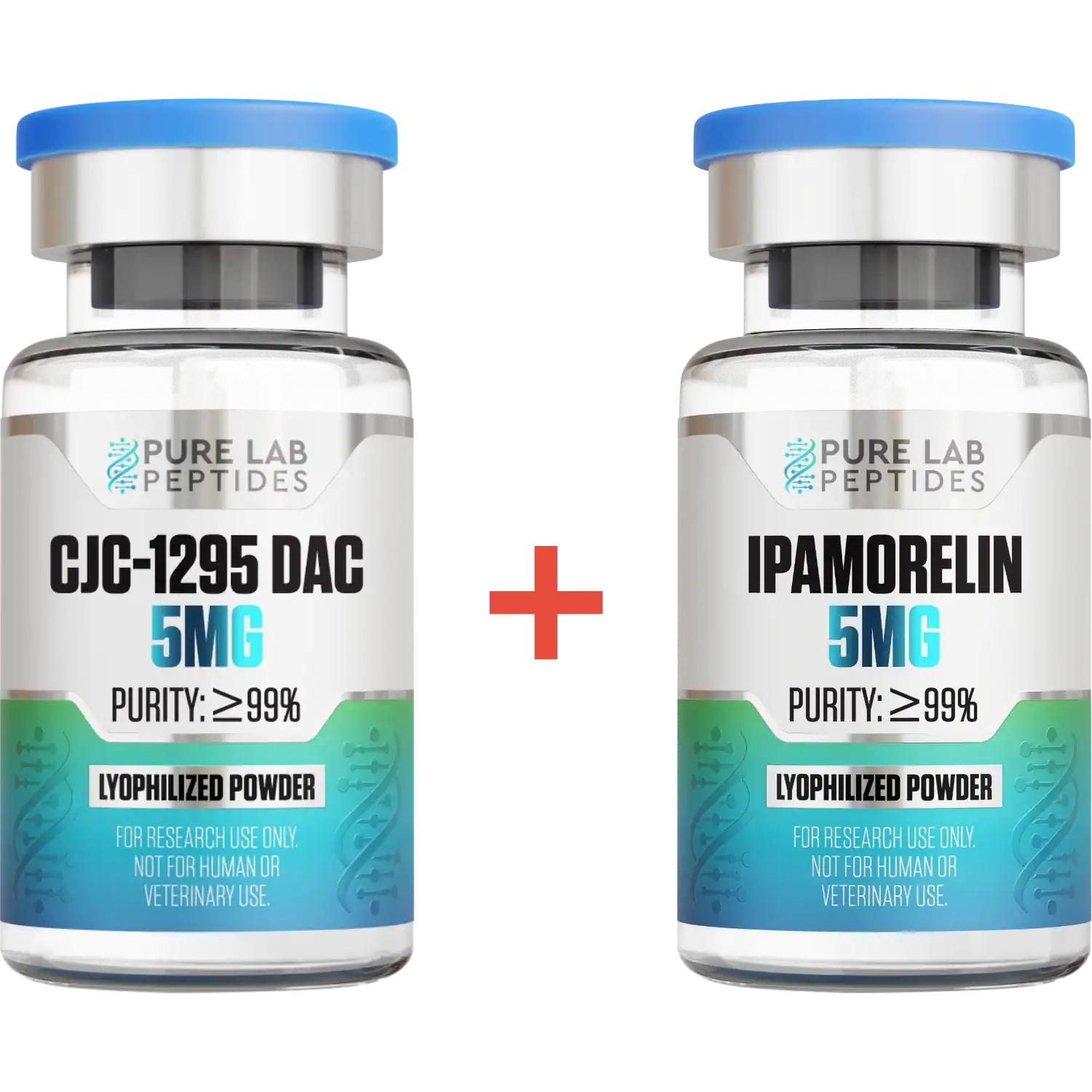
- Lyophilized powder vials (commonly labeled in mg): You reconstitute with a specified sterile diluent, then measure a resulting concentration for injection.
- Pre-mixed solutions (less common in “research peptide” contexts): Often simpler dosing, but check storage stability.
- Single peptide vials vs combo vials: Some products combine peptides; that changes how you interpret the total “mg” and how each component contributes.
Common quality signals consumers look for (and what to interpret cautiously):
- Clear labeling: peptide identity, batch/lot number, and a meaningful concentration or intended reconstitution guidance.
- COA availability: a third-party certificate of analysis can be a useful signal, but it should match the lot you received and be specific about testing (purity, identity, contaminants).
- Reconstitution guidance: dosing plans often rely on a consistent diluent volume. If instructions are vague, dose accuracy can suffer.
- Storage instructions: correct storage can affect potency. A product that isn’t handled properly can change what you’re actually dosing.
Practical consumer note: Even when you’re using the right peptide dosage math, injection technique and measuring accuracy matter. Use calibrated syringes, follow reconstitution steps carefully, and avoid improvising diluent volumes.
Common dosage terms you’ll see: “mg” (milligrams) on vials and “mcg” (micrograms) or “units” in injection guidance. The unit mismatch is one of the most frequent reasons people accidentally under- or overdose compared with what they intended.
Example ingredient/product context many buyers consider (varies by brand and lot): blended research peptide vials, often supplied as dry powders intended for reconstitution and injection. The exact “ingredient” is the named peptide(s) in the label; quality comes from identity and purity testing, not just the marketing name.
Comparison of Common Options
| Format | Typical Dose/Use | Pros | Cons | Cost | Best For |
|---|---|---|---|---|---|
| Single peptide dry vial (mg label) | Often conservative “start low” regimens; dosing depends on reconstitution concentration | Flexible; easier to isolate variables | Requires careful reconstitution and measuring | Mid | First-timers who want a controlled experiment |
| Combo peptide vial (multiple mg components) | Stated as combined totals; you still must dose each component | Convenience if ratios are consistent | Difficult to attribute effects or side effects to one peptide | Varies (often higher) | Users comfortable with tracking and tolerability |
| Pre-mixed solution (if available) | Measured directly from a known concentration | Less reconstitution math | Stability/storage becomes more important | Often higher | People prioritizing dosing precision |
| “Guided bundle” kits (includes supplies) | Dosing schedule bundled with instructions | Better support for technique | Bundled instructions may still be overly confident | Mid-to-high | Buyers who want fewer setup mistakes |
| Alternative delivery (oral claims) | Often marketed differently; may not be comparable to injection | Non-injection appeal | Bioavailability and dosing equivalence may be unclear | Varies | Consumers who value non-injection convenience |
Buying Framework and Red Flags
Think of peptide dosage quality as a chain. If any link is weak—labeling, COA match, reconstitution instructions, or packaging integrity—your dose plan becomes less meaningful.
Checklist before purchase (framework):
- Lot-specific documentation: Does the COA clearly correspond to your batch/lot number?
- Identity and purity clarity: Are the tests specific and readable, not just generic statements?
- Clear reconstitution guidance: Do they state intended diluent volume and how to calculate a concentration?
- Realistic dosing instructions: Do instructions avoid extreme “stack everything” schedules?
- Packaging integrity: Is shipping/temperature handling addressed, where relevant?
- Transparent policies: Are returns, support, and product documentation accessible?
Red flags (stop and reassess):
- COA looks mismatched, missing, or doesn’t clearly identify your lot.
- Vague dosing instructions (“use as directed”) without concentration math.
- Marketing language that overpromises outcomes or ignores side effects.
- Inconsistent vial appearance across multiple vials you receive.
- Refusal to provide documentation when requested.
Common Mistakes and How to Avoid Them
- Mixing up mg vs mcg: This is the #1 math trap. Keep a written conversion and concentration worksheet.
- Changing diluent volume: If you reconstitute with a different volume than the plan assumes, your peptide dosage changes.
- Skipping tolerability checks: Don’t assume you’ll “push through.” If side effects show up, stop and reassess.
- Starting with aggressive schedules: Better consumer outcomes come from smaller steps, better tracking, and fewer variables.
- Assuming injection equals precision: Needle sizing, injection angle, and technique affect local reactions and accuracy.
- Not tracking outcomes: If you don’t record sleep, appetite changes, injection site reactions, and workout recovery ratings, you can’t tell what your plan is doing.
- Combining everything immediately: If you stack multiple peptides, you lose the ability to interpret side effects and true tolerability.
- Ignoring contraindication logic: If you have conditions affecting hormones, glucose regulation, or have a history of injection complications, talk to a clinician before experimenting.
FAQ
Is it proven that a specific Essential Guide to Peptide Dosages schedule will work for body composition in men 35–44?
Not in the simple “plug in this dosage and you’ll get results” way. Some peptides have partial evidence (often mechanism-based or limited trials), but many real-world dosing plans aren’t directly supported by large, high-quality human studies. A cautious approach treats dosing as an individualized trial and prioritizes safety and tolerability.
How long does it take after starting Essential Guide to Peptide Dosages to notice any meaningful changes?
If people notice anything, it’s often within 1–3 weeks for tolerability-adjacent markers (sleep quality, appetite patterns, injection site reactions). Larger body composition changes typically require longer time and consistent training/nutrition. However, absence of noticeable changes early doesn’t prove nothing is happening—it just means you don’t have evidence yet.
What are common side effects when following Essential Guide to Peptide Dosages, and when should I stop?
Common issues reported by consumers include injection site reactions (redness, itching, swelling), sleep disturbance, headache, unusual appetite changes, or jitteriness. If you experience persistent or worsening symptoms, signs of an allergic reaction, significant sleep disruption, or any concerning systemic symptoms, stop the trial and seek medical guidance.
Can I combine peptides if I follow an Essential Guide to Peptide Dosages, or should I avoid stacking?
Stacking is a frequent mistake because it makes side effects harder to attribute and can increase uncertainty about tolerability. If you experiment, a safer consumer approach is to start with one variable at a time, keep doses conservative, and avoid stacking until you understand how you personally respond.
Oral vs injection: how does an Essential Guide to Peptide Dosages differ for alternative delivery methods?
Oral and injection dosing are not automatically equivalent because absorption and bioavailability can differ. If a product is marketed as oral, the “dose” may not translate the same way as injection plans. Consumer caution: require clear labeling, credible documentation, and dosing logic that explains why equivalence is expected.
A Practical 2-Week Experiment Framework
This framework is designed for cautious testing of peptide dosage choices without promising outcomes. The emphasis is on tracking and safety.
Before day 1 (prep):
- Write your dosing plan and include the concentration calculation from your reconstitution volume.
- Create a simple tracker: date, dose administered, time, injection site notes, sleep score (1–10), appetite notes, workout recovery rating (1–10).
- Decide your stop rules: e.g., persistent injection reactions beyond a set timeframe, sleep disruption beyond a threshold, or any concerning symptoms.
Days 1–3 (setup tolerance):
- Use a conservative starting approach consistent with the guide’s cautious intent.
- Pay attention to local reactions and sleep quality. If problems show up immediately, don’t “assume it’s nothing.”
Days 4–7 (consistency check):
- Maintain consistent timing and technique.
- If you suspect reconstitution or measurement errors, stop and correct before continuing.
Days 8–14 (decision window):
- Assess your tracker for patterns: tolerability trends matter more than hoping for dramatic results.
- If you have no measurable positives and tolerability is poor, stop the trial. “No effect” plus side effects is a red flag, not a reason to push harder.
- If tolerability is acceptable and you see small, consistent changes (sleep/recovery perception), you can consider whether to extend cautiously—preferably with clinician input.
Stop rules (consumer-grade): persistent worsening symptoms, signs of allergy, significant injection complications, or any systemic concern. When in doubt, stop.
About the Author
Jordan Miles is a consumer-focused health technology and supplement documentation reviewer who has spent the last 8 years comparing dosing instructions, reconstitution math, and labeling clarity across fitness-oriented research products. His work centers on practical measurement accuracy (mg to mcg conversions, concentration tracking, and injection technique documentation) and on how people actually describe tolerability in the first 1–4 weeks.
Disclaimer: This article is not medical advice and does not diagnose, treat, cure, or promise outcomes. Peptides may carry risks, especially when used without medical supervision. If you’re considering peptide dosage changes or have underlying conditions, talk to a qualified clinician before starting any regimen.
Discussion